Mayan Calendar Predictions for 2012

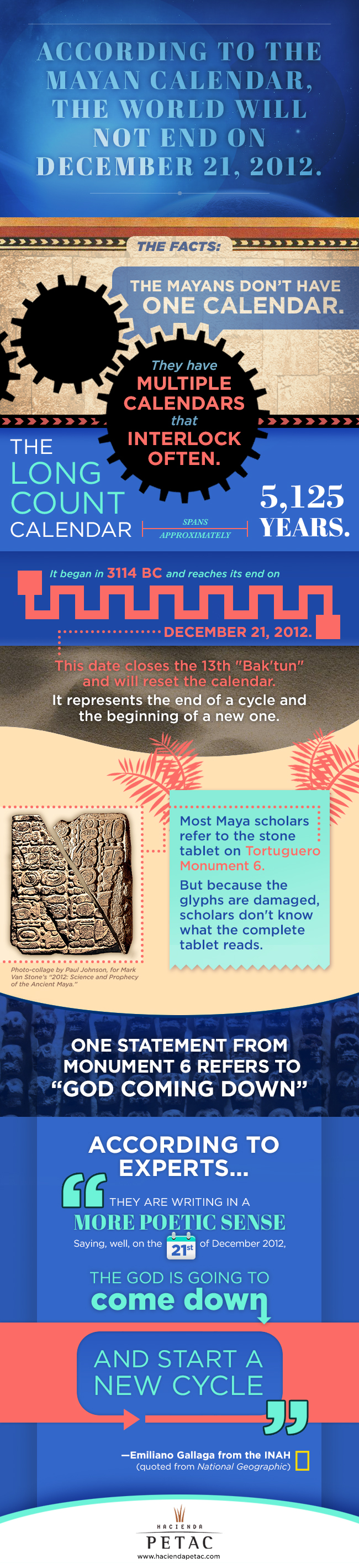
The date December 21, 2012 is not symbolic of the end of the world but rather an end to the current cycle we are living in. The Mayan Calendar isn’t just one calendar (as people often assume); it is multiple calendars that interlock. According to Mayan writings, the date December 21st closes the 13th Bak’tun and marks the beginning of new cycle. Due to varied interpretations of writings found on damaged tablets, people have misunderstood the idea of “God coming down” at the end of this cycle to mean the end of the world. Find out more information about the Mayan calendar in the graphic below.

Find out more about the world of the Maya in Mark Van Stone’s book, “2012: Science and Prophecy of the Ancient Maya”

 http://itunes.apple.com/us/book/2012-science-prophecy-ancient/id555557425?mt=11

Yucatan Food Recipes: Sopa de Lima

Sopa de Lima (Pronounced: SO-pa da LEE-ma) or Lime Soup is one of the most famous dishes in the Yucatan. It is a broth-like soup made from lime, chicken stock, shredded chicken and crispy tortilla.


We serve it at the Hacienda most often as a course during dinner. (It’s one of our favorites.)
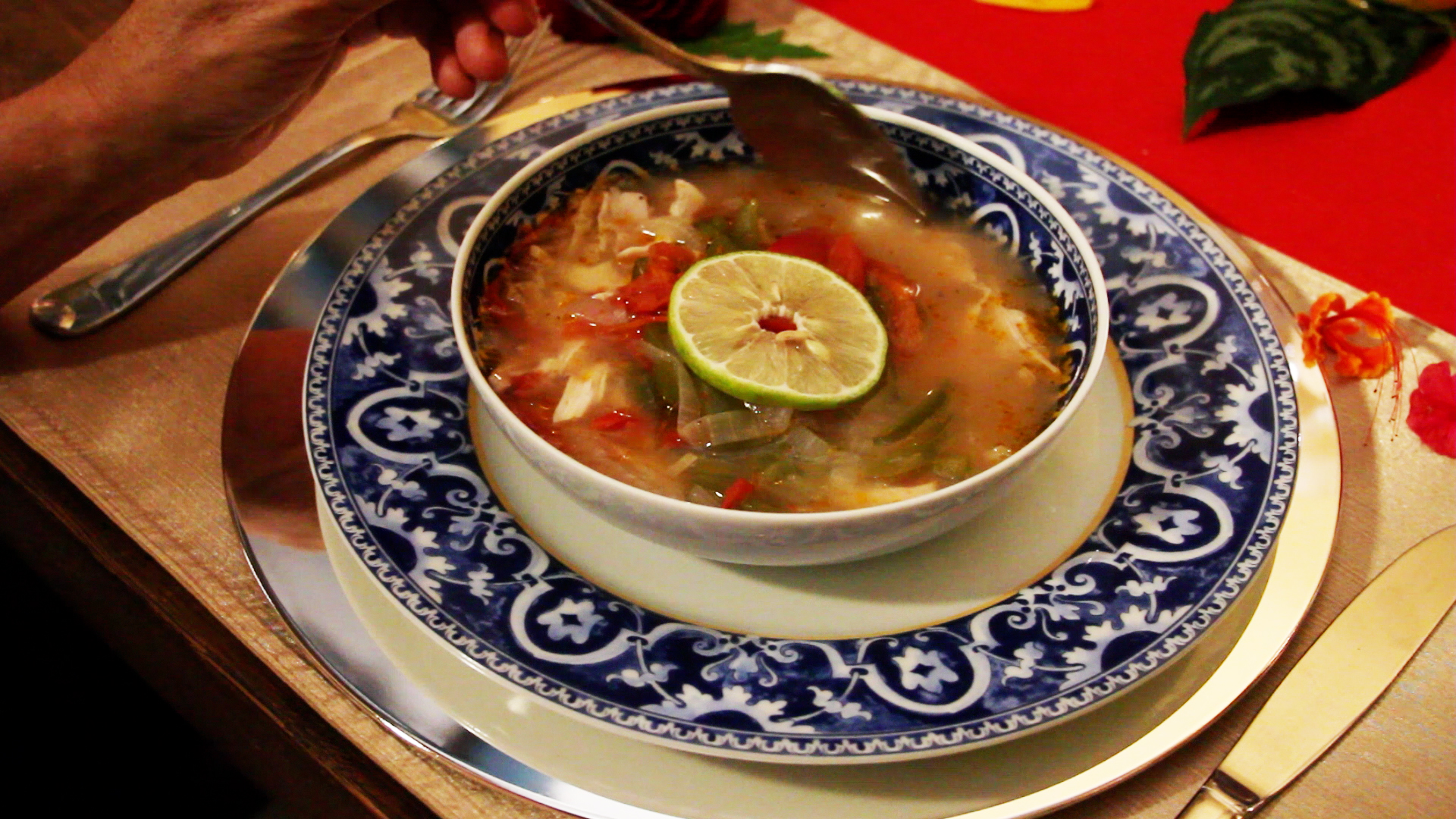
How to make it:


8 servings:


Make approximately two quarts of chicken broth.  Start with one whole chicken, add a little bit of salt and pepper to taste.


After chicken is well cooked and broth is rich with chicken flavor, strain the broth off and adjust the flavor.  Save the chicken as the breast meat will be used. Save the broth also as it will be mixed with the following ingredients:


In a large sauté pan with 2 TBSP vegetable oil, cook 3 large sliced/julienned green sweet peppers, two small to medium sized white onions, also julienned, and four firm plum tomatoes, also julienned.   Do not cook longer than five minutes in the pan.


When this has been sautéed, add all to the two quarts of chicken broth and add Mexican oregano – about 1 tsp.     Simmer all these ingredients until flavors have blended together. Check salt and now if you need to, you may add a little bit of chicken bouillon to enhance chicken broth.  Cook about twenty minutes.  Add the juice of four or five limas but do not boil the soup now, or the lima flavor will go bitter. Just heat through.


Before serving you must slice julienne sized strips of tortillas and fry them.   A good handful of freshly fried strips are to be put in the bottom of each bowl with a good handful of the shredded chicken breast meat on top.  Then ladle in a heaping portion of the broth and vegetable mix on top of the chicken.   Garnish with a slice of fresh lima.

Puuc Route Map and Infographic

The Puuc Route, also known as Ruta Puuc, is a great day trip to make while visiting the Yucatan. (Many claim it’s an experience that you shouldn’t leave out of your itinerary!) We have developed a unique route that begins from either Hacienda Petac or Merida. While navigating the infographic below, you’ll find fun details and facts about each site we have included.


(click image to view full screen)

A Celestún flamingo tour…why are people flocking there?

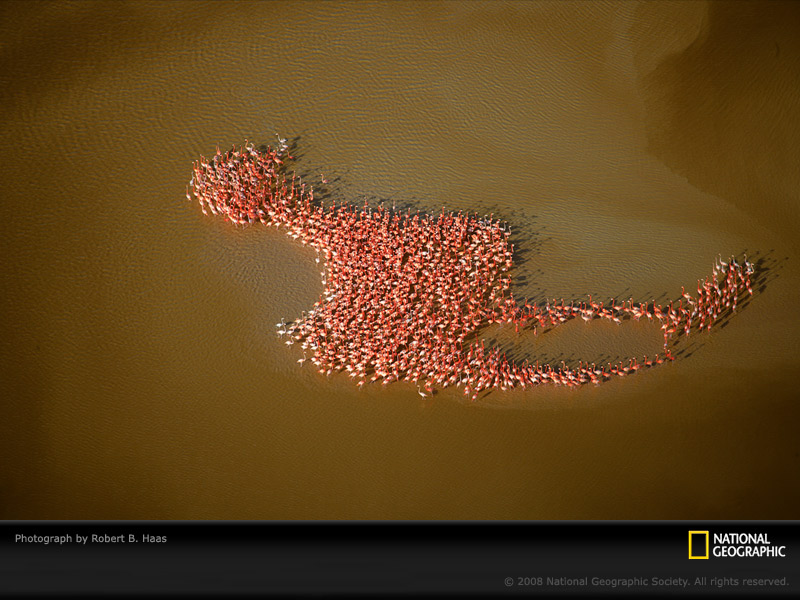
Less than two hours from Hacienda Petac you can find the small town of Celestún. The fishing village is well known for the Parque Natural del Flamenco Mexicano, (also known as the Celestun Biosphere) a 147,500-acre wetland reserve.


Although the reserve is better known for their colony of Greater Flamingo, it is home to over 300 other species of birds that pass through during migration or live there.

Greater Flamingo thrive in this region because they prefer warm environments like estauries and saline or alkaline lakes. These beautiful birds are considered to be the only tall, pink bird in any given locale. Their black-tipped bills help them to feed on small organisms in the water such as tiny fish or plankton.


Greater Flamingos are also known to breed while gathered in groups, one the key reasons why the best time to visit the flamingos is during the fall and winter months. They hold stunning “courtship rituals” in the mangroves.


Visitors can find a guided boat trip very easily from within town and spend 2-4 hours out on the wide saltwater estuary. Watch this video to get a glimpse of the experience:

Cenotes of The World and The Yucatán

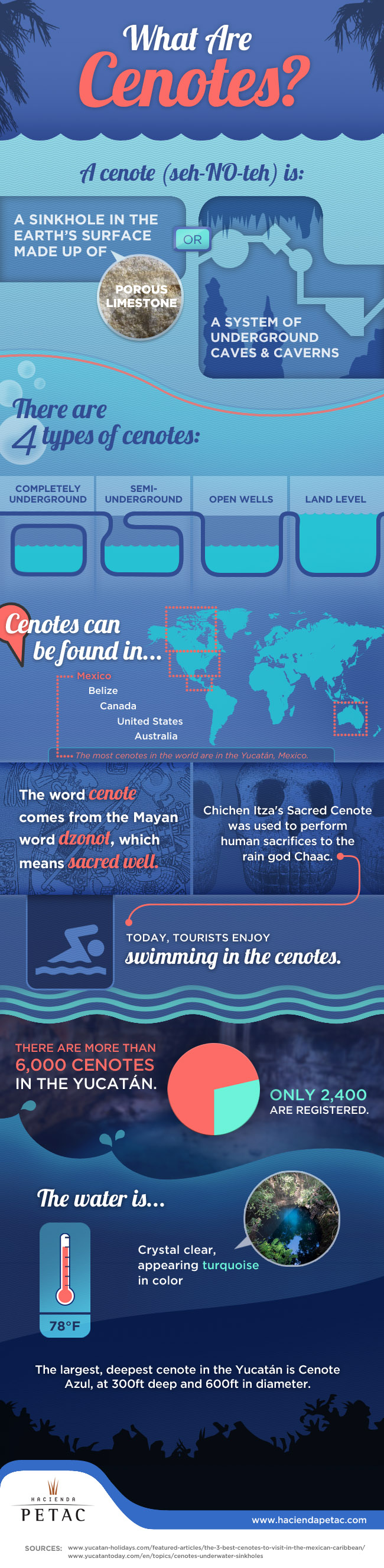
Cenotes are beautiful and mysterious. You may have seen pictures of these intriguing turquoise pools of water in the Yucatán. Take a look at the infographic below. You’ll discover a number of surprising facts—from why the Maya used them for human sacrifices to the name and location of the largest, deepest cenote in the world.

Hacienda Colors: The History of Maya Blue

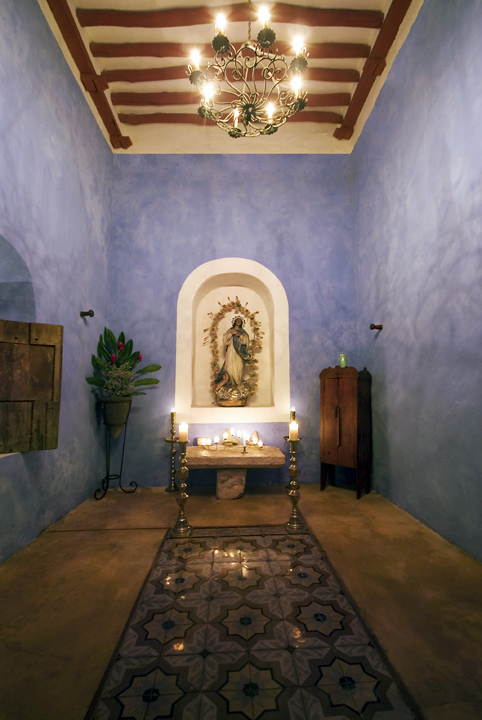
Maya blue was the color of Chaak, the rain god. It seemed fitting while renovating Hacienda Petac, that we include the pigment within the Chapel. As you can see below, it became the Chapel’s most striking element.

Maya is a remarkable turquoise-blue pigment blue that was used in the Classic (AD 250 to 900) and Post-Classic (10th to 16th Century) Period of Maya civilization. Although the exact date is unknown, some archeologists estimate that it was first produced around 300 AD. The Mayans used this beautiful color to paint offerings, murals, pottery and the bodies of humans before ritual sacrifices.


The most notable quality of Maya blue is that it resists damage from age, acid and weathering. That is one of the key reasons why this pigment has mystified scientists and archeologists for years. Research on Maya blue’s composition began in the 1950s when chemists used powder diffraction to discover its basic components. So, you might be wondering, how did the Mayans make it? Researchers discovered that the blue pigment was created before rituals by combining indigo plant and palygorskite (a natural clay) in ceramic bowls at temperatures between 150 and 200 degrees.


Today, you can find plenty of examples of Maya blue in restored Haciendas around the Yucatán. Hacienda Petac has touches of Maya blue throughout the home; it can be found in the Chapel, bedrooms, bathrooms and the décor. The color symbolizes the deep history of the Yucatán.


Older posts

About Hacienda Petac

Hacienda Petac is one of the most extraordinary vacation experiences in the world. A Premier Class Resort, this historic estate near Mérida, Yucatán offers five-star luxury to just one group at a time.

Visit our website